
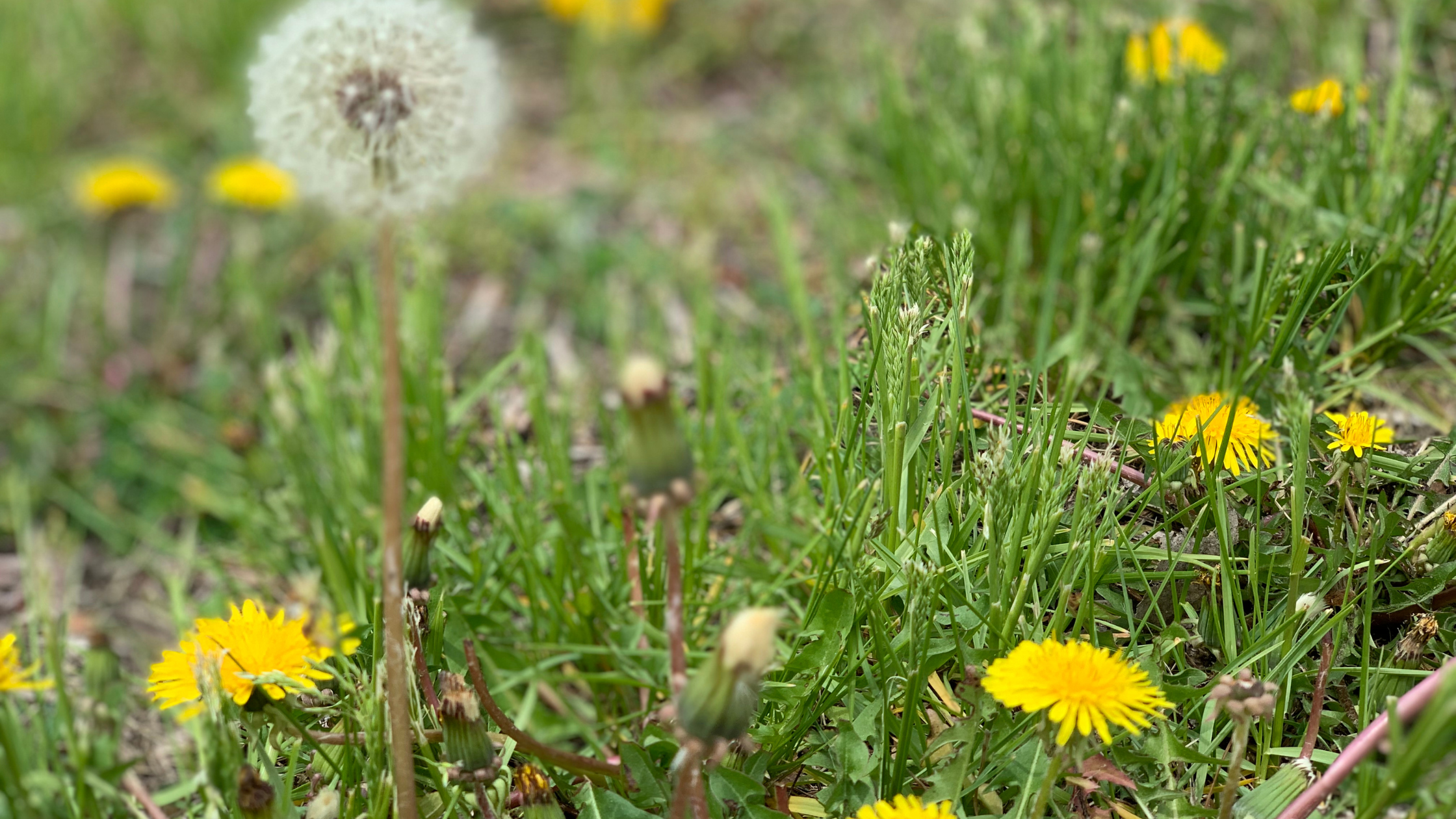
Somewhere along the way, the American lawn became a project. Fertilize it, edge it, spray anything that doesn’t belong. For most people, that meant declaring war on a dozen plants that had been growing quietly and purposefully in yards across this continent for centuries. The dandelion that you dug out last Saturday. The low mat of chickweed that appeared in your garden bed this spring. The thick-stemmed purslane spreading across the vegetable patch. Most of it went into the yard waste bag without a second thought.
Here’s what nobody told you: some of those plants are more nutritious than what you drove to the grocery store to buy. Health food stores sell dried versions of them for ten to forty-five dollars a pound. Herbalists have been documenting their medicinal uses for over two thousand years. And they came back on their own this year, for free, the same way they have every year. What you pulled up and threw away was worth keeping.
What the Herbicide Industry Doesn’t Want You Figuring Out
Before lawns became a status symbol in the mid-twentieth century, most American households had a very different relationship with the plants growing around them. Dandelion was brought to this continent intentionally by European settlers in the 1600s — not as a weed, but as a food and medicine crop. Plantain spread so reliably alongside European settlements that early American herbalists called it a trail marker. These plants were cultivated on purpose because people understood what they were worth.
Then came the postwar suburban ideal of the perfect grass lawn, and with it an entire industry built around the idea that anything growing in that lawn uninvited was a problem to be eliminated. Herbicide companies needed you to see weeds as enemies. A lawn full of dandelions and purslane is a lawn that doesn’t need their product. So the knowledge of what those plants actually were got quietly left behind, replaced by a bottle of weed killer on one side and a bottle of supplements on the other.
The result is that the average American now pays to kill plants in the yard and then pays again to buy packaged versions of the same plants at a natural health store. The plants didn’t change. The knowledge around them did.
What Your Grandparents Knew About These Five Plants
The five edible weeds in your yard below are among the most widely documented edible and medicinal plants in North America. They require no planting, no watering, no fertilizer, and no purchase. They show up on their own. Here’s what each one actually is.
- Dandelion (Taraxacum officinale) Every part of this plant — leaf, root, and flower — is usable. The leaves contain more beta-carotene than carrots, more calcium per gram than milk, and more iron than most greens sold at the grocery store. Health food stores charge fourteen to eighteen dollars a pound for dried dandelion leaf. The root has the strongest medicinal research behind it, with documented support for liver function and bile production going back centuries of traditional use confirmed by modern studies. Harvest young leaves in early spring before the plant flowers — that’s when they’re mildest. The dried root makes a tea you can prepare year-round.
- Broadleaf Plantain (Plantago major) This is the wide, oval-leafed plant growing in every driveway crack and sidewalk edge in America — parallel veins running lengthwise, low rosette close to the ground, small flower spikes rising from the center. Indigenous communities across North America used it for wound care, insect stings, and skin inflammation long before European contact. The leaves contain compounds shown in laboratory research to have measurable anti-inflammatory and antimicrobial properties. A fresh leaf, cleaned and lightly crushed to release the juice, applied directly to a bee sting or minor cut, is not folk medicine. It’s a documented, practical response that costs nothing and grows in the crack of your driveway.
- Chickweed (Stellaria media) Low-growing, bright green, with small white star-shaped flowers and one thin line of fine hairs running along a single side of the stem — that hairline is the identification key. Chickweed grows in the cool seasons, spring and fall, when most other plants have died back. It’s edible raw in salads or cooked like spinach, high in vitamin C, and mild enough that most people find it pleasant. Externally, herbalists have used chickweed-infused oil for eczema, psoriasis, and general skin irritation for generations. Dried chickweed sells for twelve to twenty dollars a pound at natural health stores. It grew in your garden beds for free this spring.
- Purslane (Portulaca oleracea) Thick succulent stems, small paddle-shaped leaves, reddish color close to the ground, spreading outward rather than growing upright. Gardeners in warm climates have fought this plant for decades because it’s almost impossible to kill — pull it up and it regrows, leave it in the sun and it reroots when it rains. That toughness reflects something useful. Purslane is the only common weed in the continental United States that contains meaningful levels of omega-3 fatty acids — the same type found in flaxseed and walnuts. It’s also high in vitamins A, C, and E, and contains more magnesium per gram than most leafy greens. Organic purslane supplements sell for fifteen to twenty-two dollars a pound. The weed you’ve been spraying with herbicide has a better nutritional profile than most supplements in your cabinet.
- Lamb’s Quarters (Chenopodium album) Upright-growing, light green to gray-green leaves with a distinctive pale, powdery coating on the undersides and new growth — it looks almost dusty, and that waxy coating is your identification marker. Lamb’s quarters is in the same botanical family as quinoa. It outperforms both spinach and kale on iron and calcium per gram. Traditional communities across Central Asia, South Asia, and North America ate it as a staple food for centuries. The young leaves are best — steam them like spinach, add them raw to salads, or dry them for soups through winter. It’s probably growing along your fence line right now, and health food stores sell it dried for eight to fourteen dollars a pound.
How to Start Using What’s Edible Weed in Your Yard
None of this requires special equipment, a foraging course, or a trip anywhere.
- Identify before you use. Photograph what you think you have and run it through a plant identification app — iNaturalist and PictureThis both perform well on all five of these species. Cross-reference with a physical field guide if you’re new to foraging. These five plants are among the most distinct and well-documented in North America, but always confirm before consuming anything.
- Harvest from clean locations only. Never take from areas sprayed with herbicide or pesticide, from the edge of heavily trafficked roads, or from spots where dogs walk regularly. Plants absorb what’s in the soil around them. A clean location means a clean plant.
- Take the young growth. New leaves and tips are the most nutritious and the best tasting. Leave the roots intact on plants you want to return. Rinse everything thoroughly before use.
- Start this week with what you can identify with confidence. Dandelion and plantain are the easiest to recognize and the lowest-risk starting points. Pick a few young dandelion leaves, rinse them, and add them to a salad. Crush a plantain leaf and hold it against a bug bite for ten minutes. That’s the whole first step.
- Dry what you can’t use fresh. Spread clean leaves on a baking sheet and dry in the lowest setting of your oven with the door slightly open, or hang small bundles in a dry, ventilated space. Store in sealed glass jars away from light. Dried material holds its nutritional value well and gives you a supply through the winter months when these plants aren’t growing.
If you’d like to see all five plants described and identified on screen, with closer detail on each one’s medicinal history and the research behind it, [watch the full video here]. Seeing the plants side by side makes identification considerably easier, and the video covers the historical context of why this knowledge disappeared in the first place.
Your great-grandparents didn’t need a health food store. They needed a yard and the knowledge of what was growing in it. That knowledge was never lost — it was just quietly stopped from being passed down, because passing it down doesn’t sell supplements or weed killer. It belongs to you. It’s growing in your yard right now. All you have to do is stop pulling it up.